As (mostly) affordable luxuries, cosmetics can help maintain a sense of control when everything else feels uncertain. Right now, that instinct is reshaping how people buy. Although many shoppers will still spend on beauty, the high cost of living means they seek value for money and are more sceptical than ever. Influencer content and online reviews are now often understood as incentivised and therefore inauthentic, so consumers turn to professionals, like doctors and chemists, and cross-reference multiple sources before they buy.
This is the shift from System 1 thinking (fast, emotional, instinctive) to System 2 (slow, logical, hard to fool). Winning over a System 2 consumer takes more than a beautiful bottle and a celebrity face, which is where the Elaboration Likelihood Model comes in.
In this model, advertising takes two routes: the peripheral route, which relies on quick emotional cues like prestige packaging and actress endorsements, like Dior, and the central route, which leads with substance and evidence, such as Kiehl’s information-led packaging. As consumers get more analytical, businesses must take the central route.
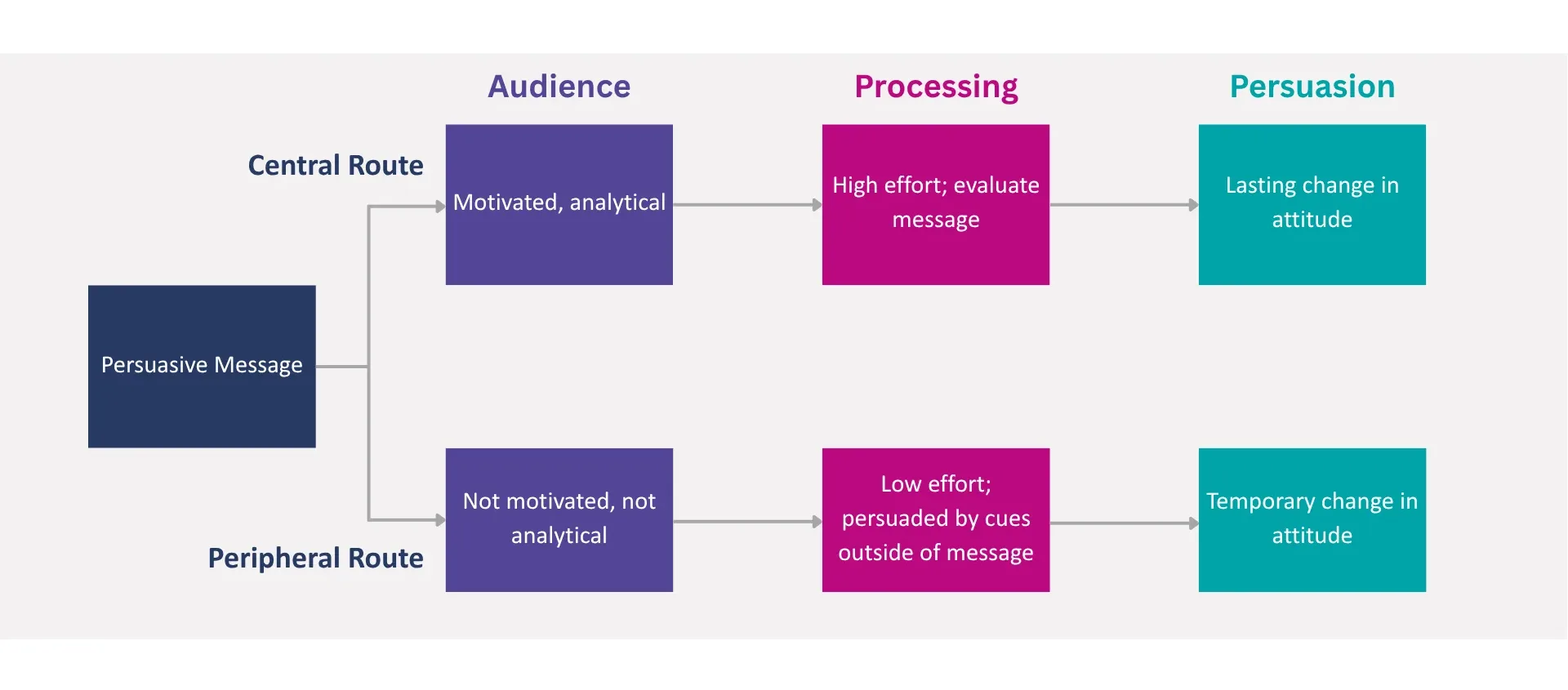
Why beauty brands need to use the central route
The ingredient-led skincare boom was supposed to signal transparency, and it worked, until every company started feeding into it. Now, as savvy beauty consumers seek to differentiate the mass of “scientifically formulated” products, they’ve become ingredient-fluent. This is the central route fully in effect, as peripheral cues no longer close the deal alone. Consumers cross-reference product effectiveness in-store, on Reddit, and with AI before they commit.
How to use the central route:
- Acknowledge that your consumers are educated. Signal you’re speaking with someone who knows the basics, not at them.
- Go beyond the ingredient to the formulation story, and let it do the heavy lifting over prestige aesthetics be clear about concentration, delivery mechanism, and how to use the product optimally.
- If you’re duping, dupe the formula. Consumers comparing alternatives are looking at actives and percentages, not similarities in packaging.
AI is not always the way
The analytical consumer is, in part, a pushback against AI and the fear of being guided by algorithms with commercial motives. When Sephora integrated its app with ChatGPT earlier this year, the backlash was fierce, with online consumers threatening to boycott the brand entirely.
But AI isn’t universally unwelcome. Research shows AI-assisted shopping increases purchase likelihood by 40%. This nuance in AI acceptance shows a more analytical usage of new technology.
What this means for your brand:
- Positioning your brand as “AI-powered” is a peripheral cue that won’t make you an industry innovator in consumers’ minds. Broader terms like “technology,” “analysis,” or “smart” may land better, alongside a clear explanation of how AI works with humans, not instead of them.
- AI works in beauty when it’s a tool for the consumer rather than a funnel for the brand. Rather than curating what they see, use it to verify decisions at the end of the journey, alongside sales assistants, reviews, and consumers’ own research.
Selective trend following
Consumers now don’t let trends control their purchases, as online tools have equipped them to know themselves better than ever. This year, bold eyeshadows are trending, yet alongside this, so is colour analysis on TikTok, with professionals teaching consumers which “season” they are and what shades suit their undertones.
What this means for your brand:
- Show you understand shade nuance. Detailed explanations of granular shade differentiation help consumers feel in control of their decision.
- AI tools can help now, but may create competition later. AR colour-matching tools reduce purchase risk, but expect consumers to use tools outside your brand, like Sephora or LookFantastic, adding competition over which products surface.
Clairaudient consumers
Up until recently, beauty technology focused on finding solutions for current skin issues. But now things are getting predictive. Tools like Haute.AI can model how skin will age both naturally and in response to specific products. L’Oréal is already building proactive regimes based on individualised biological skin analysis.
This is the ultimate expression of the control-driven consumer. If System 2 thinking is about making rational, evidence-based decisions, predictive skincare is System 2 taken to its logical extreme, as consumers seek an informational appeal of value not just for today, but for decades ahead.
What this means for your brand:
- Efficacy claims need a longer timeframe. Two-week results are table stakes; brands gaining ground will be those who can speak credibly to five, ten, even twenty-year outcomes.
- Prepare for deeper consumer segmentation. As predictive technology matures, expect new segments built around lifetime sun exposure, stress markers, cell type, and biological age, rather than just skin concern.
- Predictive tools are a powerful purchase trigger. Comparing long-term impacts will become another point of differentiation, and brands that give consumers control over the future may see more intense loyalty.
So what?
Beauty companies and consumers are simultaneously becoming more intelligent on a chemical and computational level, doing more homework before they ever reach the till, online or in-store. Marketers need to adjust for this, using central messaging routes that make consumers feel more in control, reducing risk and driving value for now and in thirty years.