Case study – CHARITY – Diabetes UK
Mapping emotional journeys for Diabetes UK
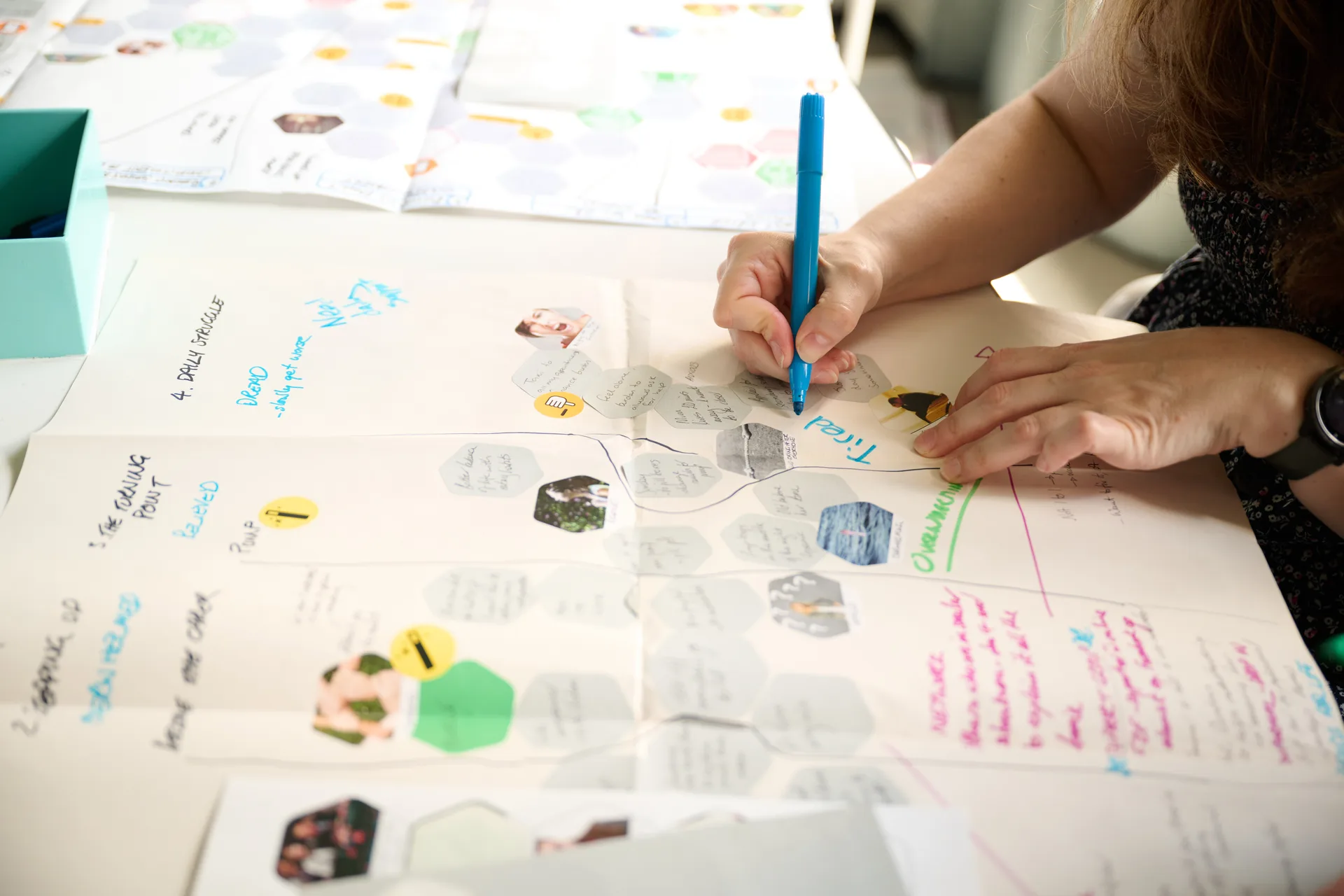
When Diabetes UK wanted to understand the emotional and psychological support needs of people living with diabetes, they needed research that went beyond data points. We adapted a customer journey methodology to map something far more profound: the lived experience of managing a lifelong health condition.
The challenge: A hidden emotional burden in need of a voice
Awareness of the emotional impact of diabetes was startlingly low, among both those living with the condition and the systems meant to support them. Few people connected their anxiety, depression or sense of relentlessness to their diabetes. To make the case for more readily available support, Diabetes UK needed evidence that was both rigorous and deeply human.
What we did: We sat with people and listened
We spent extended time in homes across the UK with people living with Type 1 and Type 2 diabetes, carers supporting partners and parents, and parents of children with the condition. Each conversation lasted many hours. Every participant thanked us afterwards for the opportunity to talk about their journey. Disappointingly, nobody had ever asked them about it before.
What we found: A clear emotional journey that nobody was supporting
What came out was a distinct emotional arc, from the shock of diagnosis through denial, a period of consuming information, trial and error and moments of balance — before the cycle began again. Each stage requires different support, and most had never been offered any. Those who had accessed help reported mixed experiences from therapists unfamiliar with diabetes or interventions that did more harm than good.
For many, the research itself was the first time anyone had drawn the connection between their emotional state and their condition. As one participant described it: an aha moment.
The impact: Research that reached Government
The findings informed a Diabetes UK paper to Government, making the case for emotional and psychological support to be embedded in diabetes care as standard, rather than optional.
“The use of patient journeys was an incredibly powerful way of capturing highly emotive moments in a way that was captivating, constructive and empowering for participants. At the debrief, journey maps were displayed on the walls, enabling the whole team to truly understand individual journeys, which resonated with the whole team.”
Senior Insight and Knowledge Officer, Diabetes UK
If you need research that gets to the heart of a complex human experience, let’s talk.